EMERGENCY CALL


Cancer remains one of the worlds leading health challenges, affecting millions of people and families every year. While not every cancer can be prevented, a significant proportion of cancers are linked to risk factors that can be reduced or avoided.
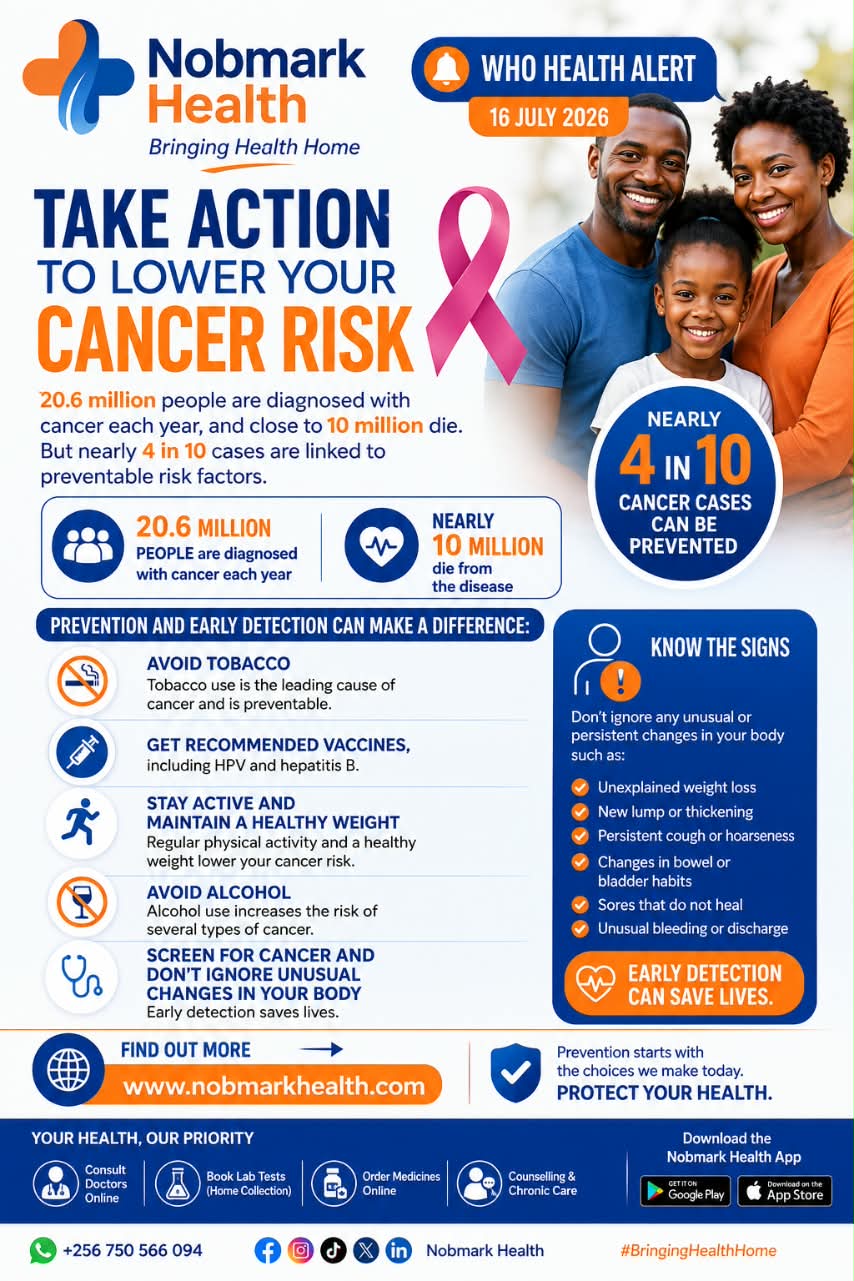
According to the World Health Organization (WHO), cancer caused nearly 10 million deaths in 2024, or almost one in six deaths worldwide. WHO also reports that approximately 38% of cancers can currently be prevented through evidence-based prevention strategies and by reducing exposure to known risk factors.
A major 2026 WHO/IARC analysis provides further evidence of the potential of prevention. It estimated that 37% of new cancer cases diagnosed in 2022—about 7.1 million cases—were attributable to preventable causes.
The message is encouraging: the choices we make today can make a meaningful difference to our health tomorrow.
Cancer
Prevention: Practical Steps You Can Take to Lower Your Risk
Cancer remains one of the worlds
leading health challenges, affecting millions of people and families every
year. While not every cancer can be prevented, a significant proportion of
cancers are linked to risk factors that can be reduced or avoided.
According to the World Health
Organization (WHO), cancer caused nearly 10 million deaths in 2024, or
almost one in six deaths worldwide. WHO also reports that approximately 38%
of cancers can currently be prevented through evidence-based prevention
strategies and by reducing exposure to known risk factors.
A major 2026 WHO/IARC analysis
provides further evidence of the potential of prevention. It estimated that 37%
of new cancer cases diagnosed in 2022—about 7.1 million cases—were attributable
to preventable causes.
The message is encouraging: the
choices we make today can make a meaningful difference to our health tomorrow.
Understanding the Global Cancer Burden
Cancer is not one single disease. It
is a broad group of diseases in which abnormal cells grow uncontrollably and
can invade surrounding tissues or spread to other parts of the body.
In 2022, there were approximately 20
million new cancer cases and 9.7 million cancer deaths worldwide according
to IARCs global cancer estimates.
The most commonly diagnosed cancers
include lung, breast, colorectal and prostate cancers. Cancer affects people
across different ages, countries and socioeconomic groups, although the burden
and access to prevention, diagnosis and treatment vary considerably.
This makes cancer prevention and
early detection important components of maintaining good health.
️ Can Cancer Really Be Prevented?
Not all cancers are preventable.
Genetics, age and other factors can influence a persons risk, and sometimes
cancer develops despite healthy lifestyle choices.
However, WHO estimates that approximately
38% of cancers can currently be prevented by addressing known risk factors
and implementing evidence-based prevention strategies.
The 2026 WHO/IARC analysis
identified 30 preventable causes, including:
Tobacco was identified as the leading
preventable cause of cancer globally, accounting for about 15% of all new
cancer cases in 2022. Cancer-causing infections accounted for approximately
10%, while alcohol contributed about 3%.
This demonstrates why prevention is
so important.
1. Avoid Tobacco
If there is one lifestyle change
that can have a major impact on cancer prevention, avoiding tobacco is among
the most important.
Tobacco use is strongly associated
with lung cancer and several other cancers, including cancers of the mouth,
throat, oesophagus, stomach and other organs.
WHO describes tobacco as the single
greatest avoidable risk factor for cancer mortality.
If you smoke, stopping can improve
your health. If you dont smoke, avoid starting and try to reduce exposure to
tobacco smoke.
Take action: If you use tobacco, speak with a healthcare professional
about evidence-based ways to quit.
2. Get Recommended Vaccinations
Some infections can increase the
risk of developing cancer.
Two particularly important examples
are:
Human
papillomavirus (HPV)
Certain types of HPV can cause
cervical cancer as well as several other cancers.
Hepatitis
B
Chronic hepatitis B infection can
increase the risk of liver cancer.
WHO recommends vaccination against HPV
and hepatitis B for people in groups for whom vaccination is recommended.
Vaccination is therefore an
important part of cancer prevention.
Take action: Talk to a qualified healthcare professional about which
vaccines are recommended for you and your family.
3. Stay Physically Active and
Maintain a Healthy Weight
Regular physical activity is
important for overall health and can help reduce the risk of several chronic
diseases, including some cancers.
Being overweight or having obesity
is also associated with increased cancer risk.
You dont necessarily need an extreme
exercise programme. Making movement part of everyday life can help.
Consider:
WHO identifies physical
inactivity and high body mass index among preventable cancer risk factors.
Take action: Find physical activities you enjoy and make them part of
your regular routine.
4. Avoid or Reduce Alcohol
Alcohol consumption is associated
with increased risk of several cancers.
The 2026 WHO/IARC analysis estimated
that alcohol was responsible for around 3% of all new cancer cases globally
in 2022.
For cancer prevention, avoiding
alcohol or reducing consumption can lower exposure to this risk factor.
If you drink alcohol, consider
discussing your consumption with a healthcare professional, particularly if you
are concerned about your health or drinking habits.
5. Eat a Healthy, Balanced Diet
A healthy diet is an important part
of cancer prevention and overall wellbeing.
Aim to build meals around a variety
of nutritious foods, including:
WHO identifies unhealthy diet,
including low fruit and vegetable intake, as a cancer risk factor.
Healthy eating is not about
achieving a perfect diet every day. It is about developing sustainable habits
over time.
Take action: Make fruits and vegetables a regular part of your meals and
limit unhealthy food choices where possible.
6. Follow Recommended Cancer Screening
Cancer screening can help identify
certain cancers or precancerous changes before symptoms develop.
However, screening is not the same
for every cancer.
Different screening recommendations
depend on factors such as:
WHO emphasizes that screening
programmes should be evidence-based and supported by appropriate diagnostic and
treatment services.
For example, cervical, breast and
colorectal cancer screening programmes can play an important role in
appropriate populations.
Important: Dont assume that one screening test is appropriate for
everyone. Speak with a healthcare professional about which screenings are
recommended for you.
7. Dont Ignore Persistent or
Unusual Changes
Prevention is only one part of
cancer control. Early diagnosis can also save lives.
Some cancers have a much better
chance of successful treatment when they are detected early and appropriately
treated.
Pay attention to persistent or
unusual changes in your body, such as:
These symptoms do not
automatically mean you have cancer. Many can be caused by other conditions.
However, persistent or unexplained changes should be evaluated by a healthcare
professional rather than ignored.
Other Cancer Risks to Consider
Cancer prevention goes beyond the
seven habits above.
WHO also identifies other
preventable or reducible exposures, including:
Ultraviolet radiation
Excessive exposure to ultraviolet radiation
can increase the risk of skin cancer. Appropriate sun protection can help
reduce exposure.
️ Air pollution
Outdoor and indoor air pollution can
contribute to cancer risk, particularly lung cancer.
Radiation exposure
Medical radiation has important
benefits when appropriately used, but unnecessary exposure should be avoided
and radiation should be used safely in healthcare settings.
Cancer-causing infections
Certain infections—including HPV,
hepatitis B and C, Helicobacter pylori and others—are associated with
cancer.
Prevention and Early Detection Work
Together
It is important to understand the
difference between prevention, screening and early diagnosis.
Prevention
Prevention focuses on reducing the likelihood
of cancer developing in the first place—for example, avoiding tobacco,
maintaining a healthy weight and receiving recommended vaccinations.
Screening
Screening looks for specific cancers
or precancerous changes in people who may not have symptoms.
Early
diagnosis
Early diagnosis means identifying
cancer in someone who has symptoms and getting them evaluated and treated as
quickly as possible.
WHO explains that early diagnosis
can improve treatment outcomes and increase the probability of survival for
many cancers.
Your Everyday Choices Matter
Cancer prevention is not about
living in fear. It is about taking practical steps that support your health.
You dont have to change everything
at once.
Start with one action:
🚭 Stop tobacco use.
💉 Ask about recommended vaccines.
🏃 Move more.
🥗 Eat better.
🍷 Reduce or avoid alcohol.
🩺 Stay up to date with recommended screening.
⚠️ Seek medical advice when something unusual persists.
Small, consistent decisions can
contribute to better health over the long term.
️ Take Action Today
The global cancer burden is
significant, but there is also a powerful opportunity for prevention.
WHO/IARCs latest evidence shows that
up to four in ten cancer cases worldwide could be prevented by addressing
known risk factors.
You cannot control every factor that
influences cancer risk. But you can take action on many of the factors that
are within your control.
Dont wait until a health problem
becomes serious.
Prevention starts with the choices
we make today.
Need health information or healthcare support?
Nobmark Health provides convenient
access to healthcare information and services.
Learn more or access healthcare
services through:
Nobmark Health —
www.nobmarkhealth.com
Nobmark Health — Bringing Health
Home.
References & Further Reading
Medical note: This article is intended for health education and
awareness. It does not replace an individual medical assessment, diagnosis or
treatment plan. Cancer screening recommendations vary by country, age, sex,
personal risk and available healthcare services.